Selling cars, bikes, and trucks online is not the same as selling furniture or electronics. A buyer looking at a used SUV wants to know the mileage, the fuel type, the ownership history, and whether the seller is even real before they pick up the phone. A generic listing script that treats every ad the same way, whether it is a sofa or a sedan, ends up frustrating both sides of the transaction.
That is the gap a focused vehicle classifieds marketplace fills, and it is also where a ready-built classifieds platform like eClassify saves months of development time. Instead of coding search filters, seller verification, and category pricing from zero, you configure a system that already understands how classified marketplaces work and shape it around vehicles specifically.
Why Vehicle Classifieds Need More Than a Generic Listing Script
Vehicles are high-consideration purchases. Buyers spend more time comparing options, asking questions, and checking seller credibility than they would for most other classified categories. A used phone or a piece of furniture rarely involves a test drive, a mechanic's inspection, or a transfer of ownership paperwork, but a vehicle almost always does. That extra weight changes what buyers expect from the platform itself, not just from the seller. A platform built for vehicles needs to handle a few things well from day one:
-
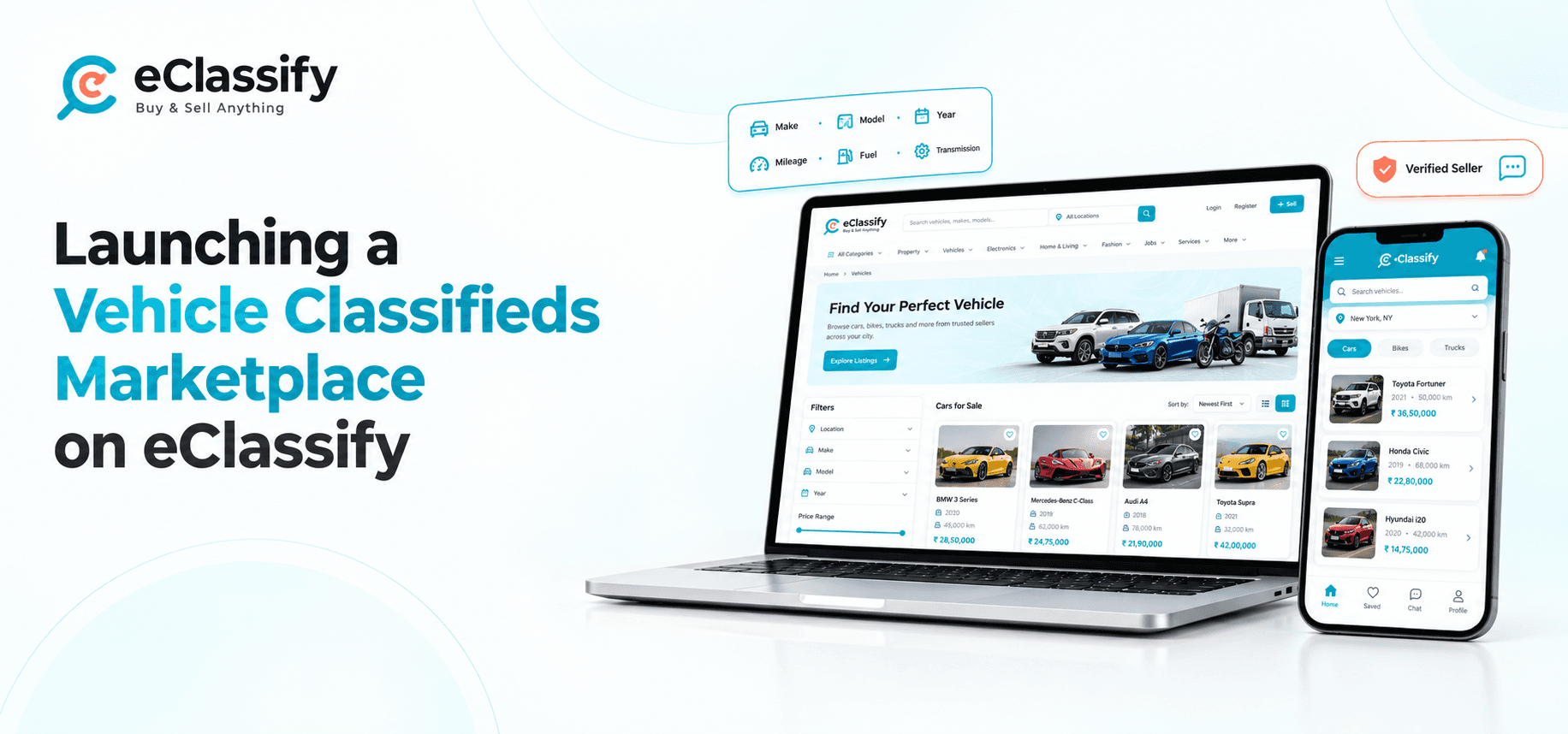
Structured specifications such as make, model, year, mileage, fuel type, and transmission, not just a free-text description box
-
Seller identity checks, since buyers are far less forgiving of anonymous sellers when the ticket size runs into thousands of dollars
-
Multiple, protected photos per listing, since vehicle buyers browse images closely before ever messaging a seller
-
Direct communication inside the platform, so negotiation and scheduling do not spill into unmoderated channels
-
Category-specific pricing, because a vehicle listing carries a different value and a different willingness to pay for visibility than a job posting or a rental ad
A basic directory script can display listings, but it rarely offers all five of these out of the box. This is where a purpose-fit classified ads marketplace setup earns its cost back quickly, because the structure is already in place before your first seller signs up.
Think about how a typical buyer actually behaves when shopping for a used vehicle online. They rarely commit to the first listing they see. Instead, they open several tabs, compare specifications side by side, zoom into photos looking for damage or wear, and only then decide which sellers are worth messaging. If your platform cannot support that comparison workflow, buyers either give up or take the conversation to a marketplace that handles it better. Getting the underlying structure right from launch, rather than patching it in later, is what keeps early buyers coming back for a second and third visit.
Setting Up Vehicle-Specific Listings With Custom Fields
Every vehicle marketplace lives or dies by how easy it is to search and filter. A buyer wants to type "diesel automatic under 60,000 km" and get exactly that, not a page of unrelated results sorted by posting date.
eClassify's Custom Field Builder Tool is what makes this possible without touching code. As the platform owner, you define the exact attributes that matter for each vehicle type:
Fields That Matter for Cars and Bikes
-
Make, model, and manufacturing year
-
Mileage or odometer reading
-
Fuel type (petrol, diesel, electric, hybrid, CNG)
-
Transmission type (manual or automatic)
-
Body condition, number of previous owners, and registration state
Why Custom Fields Beat Free-Text Descriptions
Because these fields are structured rather than buried in a paragraph, they double as filter options in search. A buyer narrows results by year range or transmission type the same way they would on a dedicated automotive site, and sellers are guided to fill in the details that actually help their ad get found. You can create separate field sets for cars, two-wheelers, and commercial vehicles under one online classified platform, so a truck listing asks for load capacity while a bike listing asks for engine displacement.
Location and Currency Also Shape the Search Experience
Vehicle shopping is also heavily local. A buyer rarely wants to see results from three states away when they are planning to inspect the car in person before paying. Location-based filtering keeps search results relevant to a buyer's city or region, which matters more for vehicles than for categories where shipping is an option. If your marketplace serves more than one country, multi-currency support means a listing priced in one region displays correctly for a buyer browsing from another, without you having to run separate platforms for separate markets.
Getting this filtering layer right early also reduces the support burden later. Buyers who consistently find relevant, nearby listings rarely need to contact you asking why they cannot find anything useful, which keeps your admin team focused on growth rather than troubleshooting search complaints.
Building Buyer Trust With Verification and Communication Tools
High-value categories succeed or fail on trust. A buyer who is about to transfer a deposit for a car wants some signal that the person on the other end is genuine.
eClassify addresses this in a few connected ways:
-
User verification lets sellers confirm their identity, which you can choose to require for higher-value categories like vehicles while keeping it optional elsewhere
-
Image watermark protection stamps seller photos automatically, discouraging photo theft and making it harder for scammers to lift images from other listings and repost them as their own
-
In-app chat keeps buyer-seller conversations, price negotiations, and viewing arrangements inside the platform rather than pushed out to phone numbers you cannot moderate
-
Reports and moderation tools on the admin side give you a way to act quickly if a listing or a user account looks suspicious
None of these features are exclusive to vehicles, but they matter more here than almost anywhere else in a general marketplace, simply because the transaction values are higher and the consequences of a bad-faith seller are worse.
Ratings and Seller Badges Add a Second Layer of Trust
Beyond one-time identity verification, ongoing signals matter too. A review system lets past buyers leave feedback on a seller after a transaction, and seller badges give repeat, reliable sellers a visible mark of credibility that a brand-new account does not have. For a dealership managing dozens of listings, a strong badge and review history becomes a competitive advantage on your platform, which in turn gives dealers a reason to stay active rather than list once and disappear.
Monetizing a Vehicle Marketplace With Category-Based Plans
A vehicle marketplace also opens up monetization options that a single-category site cannot match. eClassify's category-based subscription plans let you set separate pricing for vehicles compared to everything else on the platform.
Concretely, this means you could:
-
Charge dealers a monthly subscription for unlimited vehicle listings, priced differently than a casual seller posting a single item in another category
-
Offer featured and premium listing upgrades so dealers can push their inventory to the top of search results and the homepage during peak buying seasons
-
Accept payments through PayPal, Stripe, Razorpay, PhonePe, FlutterWave, or bank transfer, which matters if you expect to onboard dealerships that expect professional invoicing
-
Support multiple currencies if your vehicle marketplace serves buyers and sellers across more than one country or region
Because subscription tiers are set at the category level, you are not stuck with one flat price for every kind of seller. A private individual selling one motorcycle and a used-car dealership managing forty listings a month can both use the same classified ads platform, just on different plans.
Advertising as a Second Revenue Layer
Subscriptions and featured listings are not the only income source available. Banner ad placements and integrations with Google AdMob or Google AdSense let you earn from platform traffic itself, not just from sellers. For a vehicle marketplace with steady search volume, this becomes a meaningful secondary revenue stream that runs alongside subscription income rather than replacing it, and it does not require any additional work from sellers or buyers to generate.
Launching Your Vehicle Marketplace Step by Step
If you are working from a blank slate, the rollout generally looks like this:
-
Define your vehicle categories cars, bikes, commercial vehicles, or whatever split fits your market
-
Build custom fields for each category so search filters match how buyers actually shop
-
Set category-based subscription pricing, separating casual sellers from dealers
-
Turn on verification for vehicle sellers to establish trust from the first listing
-
Configure payment gateways and currency settings based on where your buyers and sellers are located
-
Enable featured listings as a revenue stream before you even onboard your first paying dealer
Because eClassify ships as a ready-to-launch Flutter and Laravel solution rather than a from-scratch build, most of this is configuration work rather than development work. For anyone who has priced out a buy classified ads script against building a comparable marketplace from zero, the time difference alone is usually the deciding factor.
It also helps to think about launch in phases rather than trying to perfect every category on day one. Many operators start with one or two vehicle types, cars and bikes for example, get the field structure and pricing right with a small group of early sellers, and only then expand into commercial vehicles or additional regions once the core experience is working smoothly. This staged approach keeps early support requests manageable and gives you real usage data before you commit to a wider category structure.
Where eClassify Fits
eClassify was not built as a single-purpose vehicle site, and that is actually the advantage. You get a full classifieds foundation, mobile apps, a web platform, and a Laravel admin panel, and you shape the categories, fields, and pricing around vehicles specifically. If you later want to expand into real estate, electronics, or job listings under the same platform, the underlying structure already supports it without a rebuild.
Before locking in your category and field structure, it helps to see how listing management and ad approval actually work day to day once sellers start posting. How admins review, organize, and approve vehicle listings before they go live is the next piece of that setup.
Ready to Launch Your Vehicle Marketplace?
eClassify gives you the categories, custom fields, verification, and monetization tools to launch a vehicle classifieds marketplace without building from scratch. Explore eClassify on WRTeam Marketplace to see the full feature set and get started.