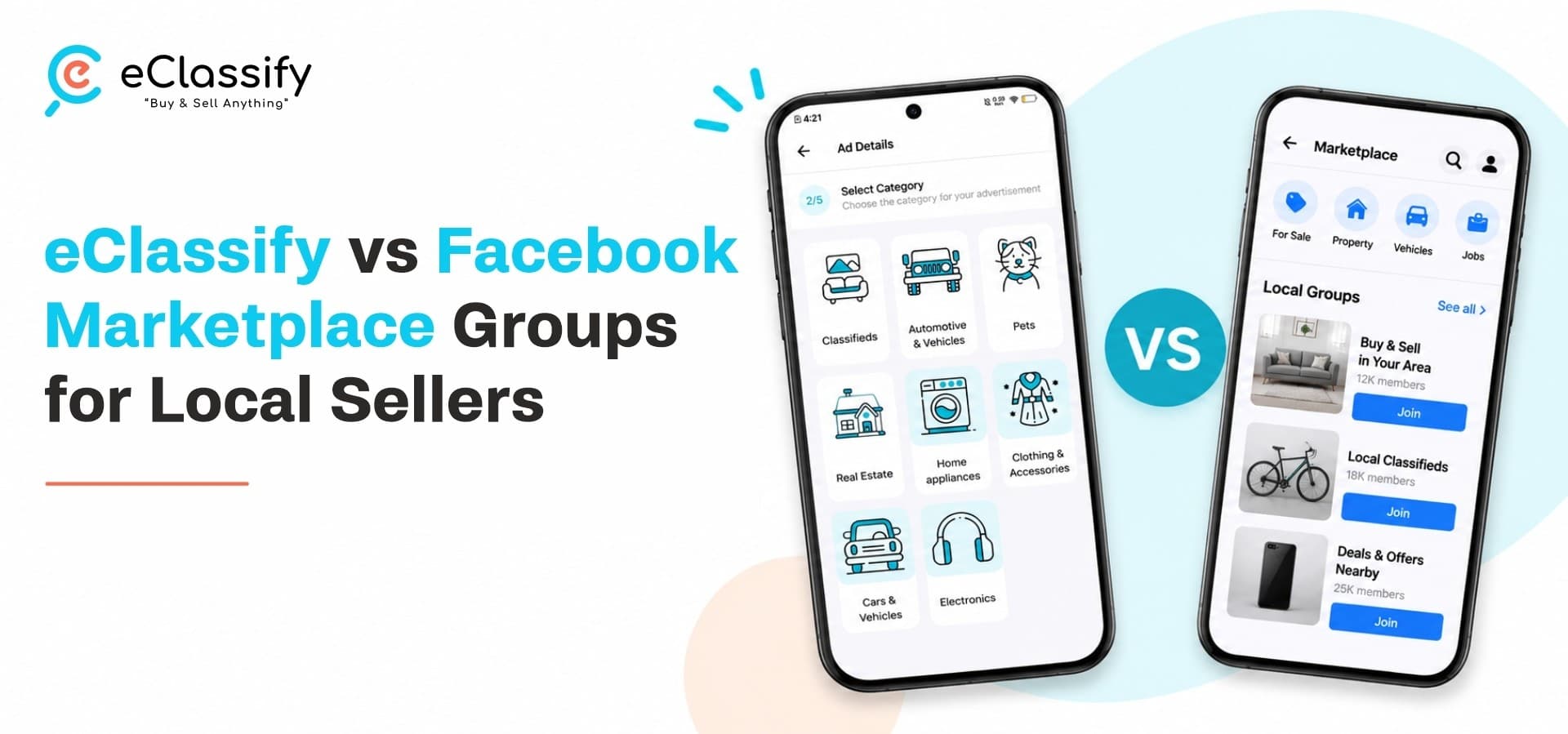
Every town has a group where neighbors sell sofas, bikes, phones and spare rooms. These groups are free, familiar and full of people, so it is natural to ask why anyone would build something else. The answer comes down to who controls the space. If you want to run your own classified ads marketplace, you need control over rules, branding, data and income, and a group on someone else's network cannot give you that.
This post compares eClassify with Facebook Marketplace groups from the viewpoint of local sellers and of people who want to run a local marketplace. You will see where groups work well, where they fall short and how to choose.
1. Two Ways to Sell Locally
Both options help people sell things nearby, but they work in very different ways.
Marketplace Groups on a Social Network
Groups are communities inside a social network. Members post items, others comment or message, and group admins try to keep order. There is nothing to install and nothing to pay for, which is why so many local sellers start here.
Your Own Marketplace With eClassify
eClassify is a ready-to-launch marketplace sold as source code. It includes a Flutter mobile app for Android and iOS, a web platform and a Laravel admin panel. You brand it, set the rules and control how it earns.
The Core Difference
One is a space you borrow. The other is a business you own. That single difference shapes everything else in this comparison.
2. Why Groups Appeal to Local Sellers
It is only fair to start with what groups do well.
A Ready-Made Audience
Large groups already have thousands of members who log in daily. A seller who posts an item may see interest within minutes, without any marketing effort.
Zero Setup Cost
No software, no hosting and no fees to start. Anyone with an account can post or create a group.
A Familiar Experience
People already know how to use the network, so sellers and buyers need no training. For a one-time sale, this is often enough.
A Fair Summary
For a person selling a few household items, groups are convenient and effective. The trouble starts when the goal changes from selling a few items to running a local marketplace or building a business around local trade.
3. Where Groups Fall Short
The same features that make groups easy also create limits.
Posts Get Buried
Groups are built around a constant feed. A listing posted this morning is pushed down by dozens of newer posts by the afternoon. Sellers repost repeatedly, which clutters the feed and annoys other members.
No Real Structure
Groups usually lack proper categories, filters and searchable fields. A buyer looking for a two-bedroom flat under a certain price must scroll through unrelated posts. This wastes time and drives people away.
Trust Depends on Guesswork
Buyers often cannot tell whether a seller is genuine. Scam posts and fake accounts appear in many groups, and admins must review reports by hand.
You Do Not Own the Audience
The members belong to the network, not to the group admin. If the network changes its rules, limits reach or removes the group, the audience disappears with it.
Someone Else Sets the Rules
Policies, features and fees on a social network can change at any time and vary by region. Group admins can only work within those limits, so building a lasting business there is risky.
4. Side-by-Side Comparison
The table below summarizes how the two options differ for local selling.
Features, fees and policies on social networks differ by region and change over time, so check current terms before relying on any comparison.
5. Listing Quality and Structure
A marketplace works when listings are easy to create and easy to read.
Categories and Custom Fields
An online classified platform depends on structure. eClassify includes a category management system and a custom field builder, so a car listing can ask for make and year while a job listing asks for salary and experience. Buyers can compare listings quickly, and sellers know exactly what to provide.
Help With Writing Listings
Sellers who struggle with wording often post poor ads. eClassify integrates Gemini AI to help create professional descriptions and SEO-friendly metadata in seconds, so listings look better and are easier to find.
Protecting Photos
Automatic image watermarking helps prevent others from reusing seller photos. In an open group, copied photos are a common way for scammers to build fake posts.
6. Trust and Safety Compared
Trust decides whether buyers return.
Verification Tools
eClassify includes a user verification system that helps buyers identify authentic sellers and reduces fraudulent activity. Seller badges and a review system add further signals, so a buyer can see a seller's track record at a glance.
Moderation Tools
The admin panel includes a reports and moderation center, along with seller management and advertisement management. Your team can review reports from users and act on content that breaks your rules, all from one place. In a group, admins usually rely on manual checks and comment threads.
Team Roles
Staff and role management lets you assign moderators and support members with specific permissions. As your marketplace grows, you can add helpers without giving anyone full access.
7. Discovery and Communication
Buyers want to find what they need nearby and talk to sellers easily.
Location Management
eClassify includes location management, so listings can be organized by area and visitors see relevant results first. This suits local trade, where distance matters more than anything else.
Chat and Notifications
Buyers and sellers can chat inside the app, and instant notifications keep both sides informed. In a group, conversations often move to separate messaging apps, which makes follow-up harder.
Search Visibility
The admin panel includes an SEO management suite and a blog module, so your marketplace can attract visitors through search engines instead of depending on one network's feed. Multi-language and multi-currency support helps you serve mixed communities.
8. Earning From a Local Marketplace
This is where the two options differ most sharply.
Groups Do Not Pay Their Admins
A group admin spends time moderating and building a community, but the platform does not give them a way to charge sellers or earn from traffic. The value they create belongs to the network.
eClassify Is Built to Earn
A modern classified ads platform should pay for itself. eClassify supports several income paths:
-
Seller subscriptions, monthly or yearly
-
Category-based plans, with higher fees for high-value segments
-
Featured and premium listings
-
Fees from users who exceed free posting limits
-
Google AdMob, Google AdSense and direct advertising partnerships
-
Premium seller packages with listing credits
Getting Paid Easily
The platform supports PayPal, Stripe, Razorpay, Paystack, PhonePe, Flutterwave and bank transfer, so sellers in different regions can pay in a convenient way.
9. Cost and Control Compared
Price is only one part of the decision.
The License Cost
At the time of writing, the eClassify Regular License is listed at $39 and the Extended License at $799. Both are one-time licenses with lifetime validity and free updates. The Extended License adds a ready-to-launch configuration for Android, iOS, Web and Admin Panel, with six months of dedicated support.
Costs That Come With Your Own Marketplace
Hosting, Firebase usage, payment gateway fees and marketing all need a budget. Unlike a group, a new marketplace does not arrive with an audience, so you must attract sellers and buyers yourself.
What You Gain for That Cost
You gain control. You decide the categories, the rules, the branding and the pricing. You own the data and the relationship with your sellers, and you can change direction whenever you want.
10. Using Both Together
The choice does not have to be all or nothing.
Groups as a Promotion Channel
Many marketplace owners use social groups to reach people. A short post that links to your marketplace can bring in the first sellers and buyers, while your own platform provides the structure and trust the group lacks.
Building Your Own Home Base
Over time, sellers who find value in your marketplace will come directly. At that point, your own audience becomes an asset you can grow, protect and earn from.
11. When Groups Are Enough
An honest comparison also says when not to build a marketplace.
Good Reasons to Stay in Groups
Groups may be enough if:
-
You sell a few personal items occasionally
-
You do not need to charge anyone
-
You have no plans to build a brand or business
-
A simple community feed meets your needs
Signs You Need Your Own Marketplace
Consider eClassify when:
-
You want to earn from local sellers
-
You need categories, filters and verified sellers
-
You want control over rules and branding
-
You want an audience that you own
12. A Simple Decision Checklist
Use this list to judge your own goals:
-
Decide whether you want to sell items or run a marketplace.
-
List the features your sellers and buyers expect.
-
Estimate the time you spend moderating a group today.
-
Decide how you want to earn.
-
Choose the option that matches your goals with the least long-term risk.
Where eClassify Fits
eClassify suits entrepreneurs, startups and agencies that want a complete local marketplace with apps, a web platform and an admin panel, without building from scratch. If you are planning to buy classified ads script options, focus on structure, trust tools and earning features, because these decide whether a marketplace lasts.
Build a Marketplace You Own
Ready to move from borrowed space to a marketplace of your own? Explore the features, demo and license options for eClassify on the WRTeam Marketplace.