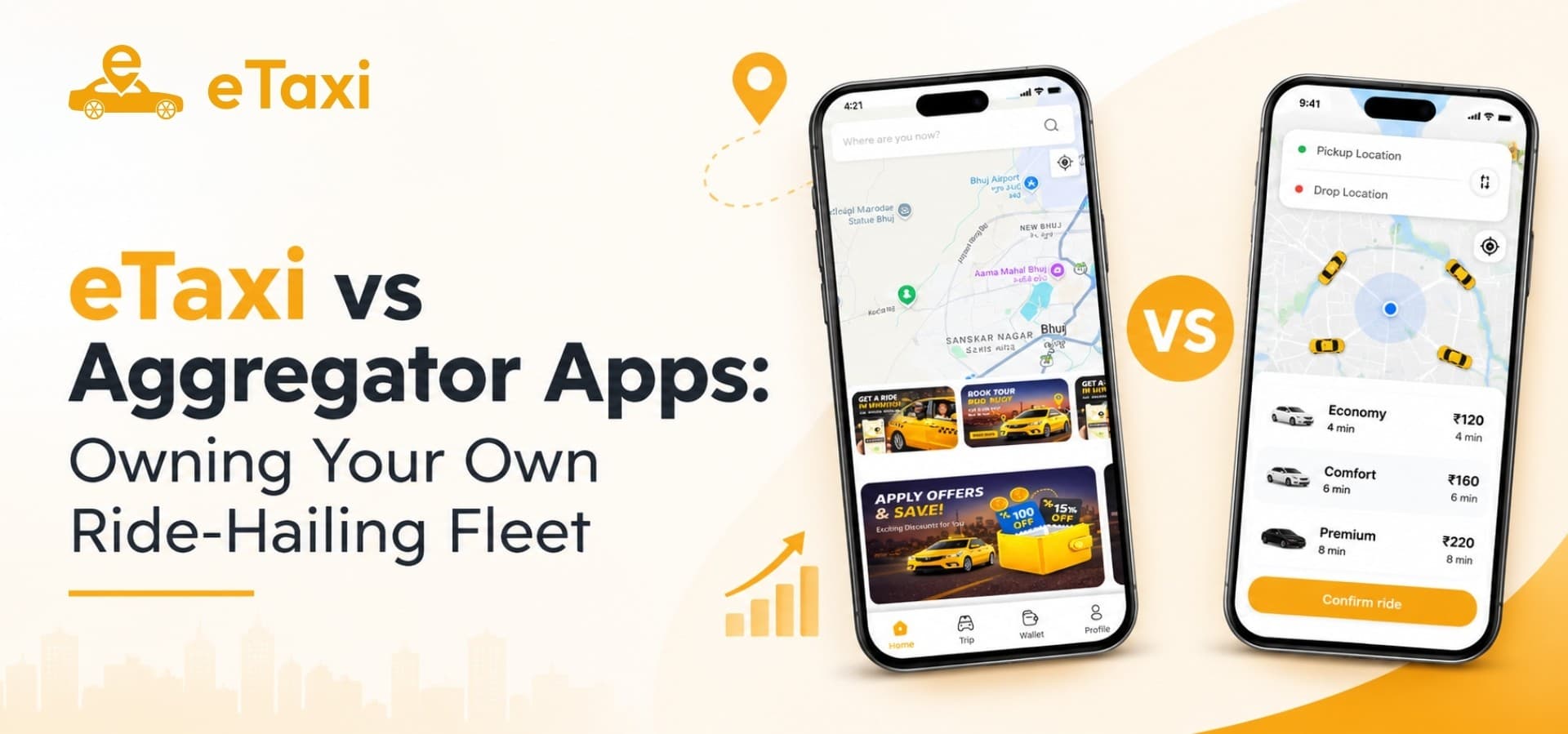
Anyone who runs a fleet of cars soon faces a choice. You can take trips through a large aggregator network that already has riders, or you can launch your own service under your own name. Aggregators are convenient, but convenience has a price, and that price grows as your fleet grows. Owning a taxi booking app changes the relationship: your riders, your prices and your data belong to you.
This post compares eTaxi with aggregator apps from the point of view of a fleet owner or transportation startup. You will see where aggregators help, where they hold you back and when owning your platform is the stronger move.
1. Two Ways to Run a Ride Business
Both options put passengers in your cars, but they work in very different ways.
The Aggregator Model
An aggregator is a large network that connects riders with drivers or fleets. The network brings the demand, sets the rules and takes a share of each trip. A ride booking app run by an aggregator usually decides how fares are calculated, how drivers are matched and how riders are treated.
The Owned Platform Model
With an owned platform, you run your own service. eTaxi is a complete ride-hailing solution sold with full source code. It includes a Flutter customer app, a Flutter driver app and a Laravel admin panel, with MySQL for data and WebSockets for real-time updates.
The Core Difference
One model gives you quick access to someone else's riders. The other gives you a business you control. That difference affects almost everything else in this comparison.
2. Why Aggregators Appeal to Fleet Owners
A fair comparison starts with what aggregators do well.
Existing Demand
Large networks already have riders opening the app every day. A new driver can start receiving requests without running any marketing.
No Technology to Build
You do not need to develop apps, maintain servers or manage payments. The network handles the technical work.
Brand Recognition
Riders recognize the network's name and trust it. For a new fleet owner, borrowing that trust can feel like a shortcut.
A Fair Summary
For an individual driver or a small fleet that wants to start earning quickly, an aggregator is a reasonable choice. The concerns appear when the business grows and the owner wants more control.
3. Where Aggregator Dependence Hurts
Terms differ between networks and change over time, so treat the points below as common patterns, not fixed rules.
Commission Takes a Share of Every Trip
Aggregators typically keep part of each fare. As your fleet grows, the amount paid to the network grows with it. This cost is ongoing and rarely shrinks.
You Do Not Set the Rules
Fares, incentives, driver requirements and cancellation policies are decided by the network. If the rules change, your business must adapt, often with little notice.
The Rider Belongs to the Network
Riders book through the aggregator's app, so you may know little about them. You cannot easily offer your own promotions or build loyalty with them.
Drivers Are Loyal to the Platform
Drivers often work across several networks. Without your own app, there is little to make them stay with your fleet.
Limited Data
Trip data, rider behavior and demand patterns often stay with the network. Without them, planning growth becomes guesswork.
4. What Owning Your Platform Means With eTaxi
Owning a platform means you carry the responsibility, and you also gain the control.
City and Zone Control
eTaxi uses polygon-based zones, so you define exact service areas and set local pricing. You can activate or deactivate cities and set independent service rules and timings for different regions.
Multiple Ride Types
You can offer bike, auto rickshaw, sedan and premium categories in one app. Adding a new vehicle class happens from the admin panel, so you can reach new rider segments without building another app.
Your Own Brand
A white label taxi app lets riders and drivers see your name instead of someone else's. With eTaxi, you receive full source code, so you can rebrand, customize and publish under your own identity.
5. Side-by-Side Comparison
The table below summarizes how the two models differ on the points that matter to a fleet owner.
Aggregator terms vary by network and region, so check current terms before relying on this comparison.
6. Pricing and Revenue Compared
Pricing control is one of the biggest reasons owners move to their own platform.
A Configurable Fare System
eTaxi lets you set base fare, distance charges, waiting time, night charges and surge rules for each city and ride type. You can protect your margins during busy hours and keep pricing fair for riders.
Surge and Peak Pricing
Zone-wise surge rules let you set special pricing for weekends, holidays or peak hours. These rules apply city-wise or zone-wise and can stack with your existing fare settings.
Commission and Cancellation Fees
Every completed ride deducts a configurable commission before the driver's wallet is credited, so the core revenue line stays with your business. Cancellation fees can also apply when riders or drivers cancel after a match is confirmed.
Promotions on Your Terms
You can create promo campaigns with fixed or percentage discounts, with city or ride type restrictions and usage limits. Built-in analytics show how each campaign performs.
7. The Rider Experience Compared
Riders return to services they trust.
Booking Made Simple
A well-built online taxi booking system shows riders their estimated fare and arrival time before they confirm. eTaxi lets customers choose pickup and drop locations inside active service zones, pick a vehicle category and book instantly.
Safety and Trust
OTP-verified trip starts, SOS alerts and live trip sharing protect riders and drivers. Customers also see verified driver credentials, including ratings and registration numbers, before the trip begins.
Payments, Wallet and Receipts
Riders can use a digital wallet for refunds, promotional credits and rewards. After each trip, a detailed receipt shows base fare, taxes and discounts, and invoices can be downloaded from trip history. Online payments run through gateways such as Razorpay and Stripe.
Support Inside the App
In-app chat and voice calling help riders and drivers coordinate pickups. Refund requests follow clear categories, with approved amounts credited to the wallet and a record of every action.
8. Drivers and Fleet Operations Compared
Your drivers are your business, so their experience matters as much as the rider's.
Your Own Onboarding
Strong taxi management software gives you control over who drives for you. In eTaxi, drivers submit personal details, vehicle data and documents such as ID, license and registration. Admins approve, reject, suspend or reactivate accounts, and drivers can see their approval status, rejection reasons and re-upload instructions.
Documents You Define
Document requirements can be changed without code. You can set mandatory documents and require re-uploads for expired licenses or permits, which helps keep your fleet verified as requirements change.
Fair Matching
A cab booking app needs a matching method that drivers trust. eTaxi assigns ride requests using proximity and ratings through a fair scoring engine instead of chance. Drivers can switch between online and offline modes and respond to ride offers within a response window.
Earnings Transparency
Drivers see daily and weekly income totals, commission details, tips and net payable balance in the app. Driver referral rewards are credited to their wallets, which helps you grow the fleet.
9. Control and Daily Operations
Running a fleet at scale requires clear oversight.
Live Monitoring
Admins can monitor active trips in real time and search historical data. The panel shows trip status, live routes, fare breakdowns and assigned drivers, with the authority to step in during disputes.
One Panel for the Business
A dependable cab management software setup should handle zones, ride types, fares, drivers, customers and refunds in one place. eTaxi's admin panel covers city and zone management, ride type management, city-wise fares and commission, promo codes, driver onboarding, customer management and refund handling.
Support and Tax
A unified support inbox lets agents handle trip-linked tickets from riders and drivers. City-wise tax management helps you apply the right rules to each ride and keep accurate records.
Reports
Detailed earnings and financial reports show fares, commission and revenue by city and ride type, so you can see where the business is strong.
10. Cost and Effort Compared
Owning a platform costs money and effort, and it should be judged honestly.
The License Price
At the time of writing, the eTaxi Regular License is listed at $19 and the Extended License at $799. Both are one-time licenses with lifetime validity and free updates. The Extended License adds a ready-to-launch configuration for Android, iOS, Web and Admin Panel, with six months of dedicated support.
Building From Scratch Instead
Many owners who search for uber clone apps are comparing a ready-made base with a custom build. A custom ride-hailing platform needs rider and driver apps, real-time tracking, fare logic, an admin panel and payment flows, and it usually takes a long time to build and test. eTaxi is its own product and makes no claim of feature parity with any brand. It gives you a finished base to launch from.
Costs That Apply Either Way
Hosting, Google Maps usage, Firebase Cloud Messaging, payment gateway fees and marketing all need a budget. Unlike an aggregator, your own platform does not arrive with riders, so you must attract them.
Local Rules
Taxi services are regulated differently from place to place. Check the licensing and tax requirements that apply to your operation before you launch.
11. Using Both Approaches Together
The choice does not have to be all or nothing.
A Gradual Move
Some operators keep working with aggregators while they build their own rider base. Over time, direct bookings through their own app replace some of the network trips, and their income per trip rises.
Building Direct Demand
You can bring riders to your app through promo codes, referral rewards and partnerships with local businesses, hotels and offices. Every direct rider is a customer you own.
12. A Simple Decision Checklist
Use this list to judge your own plans:
-
Calculate what you pay in commission each month.
-
List the pricing and rules you would change if you could.
-
Decide whether you can attract riders through your own marketing.
-
Check local licensing and tax requirements.
-
Estimate hosting, maps and messaging costs for your own platform.
-
Choose the model that gives you the control you need at a cost you can sustain.
Where eTaxi Fits
eTaxi suits fleet owners replacing manual dispatch, transportation startups and agencies building mobility apps for local clients, in single cities or across several. It gives you apps, an admin panel and the pricing, onboarding and monitoring tools in one package, so you can run a service that carries your own brand.
Build a Ride Business You Own
Ready to run a ride-hailing service under your own name? Explore the features, demo and license options for eTaxi on the WRTeam Marketplace.