Every service marketplace reaches the same question sooner or later: how does the platform earn money without pushing good providers away? Take too much from each job and providers leave for a rival. Charge too little and the business never covers its running costs. The answer usually sits somewhere between a per-booking cut and a recurring plan fee, and eDemand lets the owner choose that balance from a single admin panel.
This guide explains how commission and subscription revenue management works on eDemand, from the owner's controls to the provider's experience. You will see where each model fits, how the two can work together, and which decisions to settle before launch day.
1. Why Your Earning Model Matters Before Launch
Provider pricing is not a footnote. It decides who joins your marketplace, who stays, and how predictable your monthly income looks.
1.1 The Hidden Cost of an Unplanned Model
Many founders who picture a handyman app like Uber spend months on customer screens and booking flows, then improvise the earnings model a week before launch. That shortcut tends to backfire in three ways:
-
Providers join, find the fee structure unclear, and quietly leave.
-
The owner has no clear view of what each booking earns the platform.
-
Changing the rules later feels like a broken promise to the people doing the work.
1.2 What a Good Model Must Achieve
A workable setup keeps providers motivated, gives the owner steady income, and can be explained in one sentence. When you can say "you pay only when you earn" or "you pay a plan fee to get listed," providers understand the deal at once, and trust follows. That clarity is worth more than a clever pricing formula.
2. How Commission Works on eDemand
Commission is the most familiar way to earn on a service marketplace, and it is the easiest model to pitch to a provider who has never used your platform.
2.1 Earning on Every Completed Booking
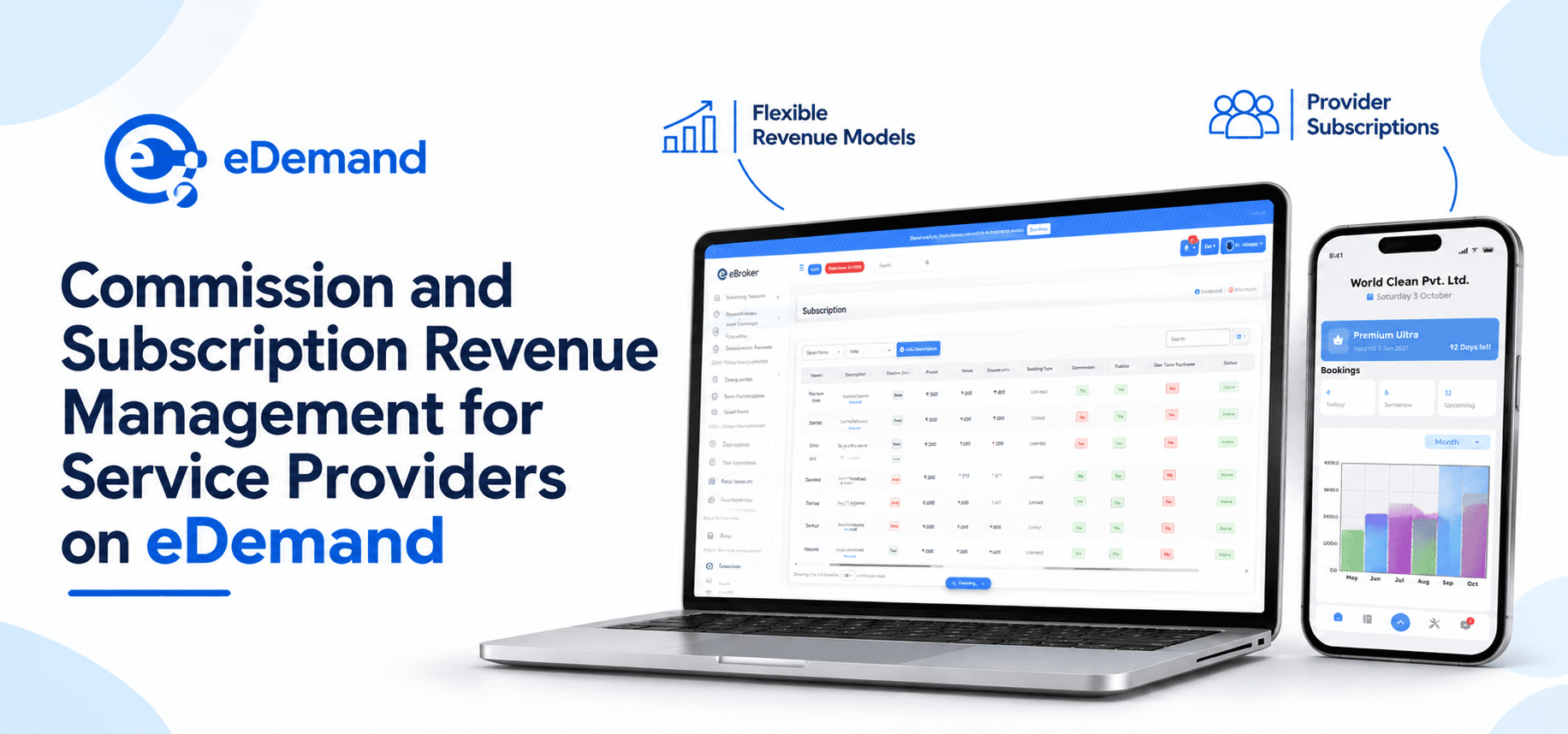
With a commission model, the platform keeps a share of each booking and the provider keeps the rest. eDemand includes commission tracking for platform owners, so you can see what the marketplace earns from its bookings instead of reconciling figures by hand at the end of the month.
2.2 Owner Control From the Admin Panel
Teams researching Uber for handyman app development often ask a practical question early: who controls the rates? In eDemand, the admin decides how earnings are split from the admin panel. Commission becomes a business decision you can review and adjust, rather than a number buried in code that needs a developer to change.
2.3 Where Commission Works Best
Commission is a strong fit when:
-
You are a new marketplace and want providers to join with no upfront cost.
-
Your categories involve higher-value, less frequent jobs, such as appliance repair or electrical work.
-
You want platform income to rise in step with booking volume.
The trade-off is that income moves with demand. A quiet month for bookings is also a quiet month for revenue, which is why many owners look at subscriptions as a second layer.
3. How Subscription Plans Work on eDemand
Subscriptions flip the logic of commission. Providers pay for access, and the platform earns whether a particular month is busy or slow.
3.1 Plans as the Provider's Entry Ticket
Most on-demand handyman app development discussions focus on the customer side, yet the provider plan is where recurring income begins. eDemand includes a plan list for providers, and the admin can set earnings through commission-based and subscription-based models. That means plans are part of the platform's earning structure, not an afterthought bolted on later.
3.2 Visibility Linked to an Active Plan
eDemand supports showing only providers with an active subscription, along with their services, on the app and web homepage. This gives a plan real value. It is not an abstract fee, it is the ticket to being seen by customers who are ready to book.
3.3 Where Subscriptions Work Best
Subscriptions are a strong fit when:
-
Your categories involve frequent, smaller jobs, such as cleaning, where a cut of every job can feel heavy.
-
You value predictable monthly cash flow over income that rises and falls with demand.
-
Your marketplace already sends providers enough customers that a plan clearly pays for itself.
The trade-off is that providers pay before they earn. A plan only feels fair once your platform has proven it can bring them work.
4. Combining Both Models for Steadier Income
You do not have to pick one model forever. Many marketplaces get the best results by layering the two.
4.1 Why a Layered Approach Works
A well-run on demand handyman app rarely depends on a single income stream. Commission scales with your success, while subscription plans cover the baseline costs of hosting, support, and marketing. Both streams are managed from the same admin panel, so you do not need separate tools or spreadsheets to keep them straight.
4.2 A Simple Hybrid Pattern
Here is a sequence that many new owners find easy to follow:
-
Launch with commission only, so providers can join without risk.
-
Watch booking volume until it flows steadily across your main categories.
-
Introduce a subscription plan with a clear benefit, such as homepage visibility.
-
Review earnings every month and adjust the split or plan list as the marketplace matures.
4.3 Keeping the Arrangement Fair
Providers talk to each other, so fairness spreads quickly by word of mouth. Keep these habits in place:
-
Explain the fee structure in plain words during onboarding.
-
Announce any change well before it takes effect.
-
Pair every plan benefit with something the provider can see, such as better exposure to customers.
5. Reviewing Results and Keeping Providers Engaged
Setting the model is the first half of the job. The second half is watching how it behaves once real bookings start.
5.1 Questions to Ask Every Month
A short monthly review keeps the earning structure healthy. Ask yourself:
-
Which categories bring in the most platform income per booking?
-
Are providers on a plan staying active, or fading out after a few weeks?
-
Do customers keep finding the providers they want on the homepage?
-
Are complaints about fees rising or falling?
The commission tracking built into eDemand gives you a starting point for the first question, and your admin panel gives you a view of providers and bookings for the rest.
5.2 Rewarding Good Providers
Ratings and reviews are part of the platform, which means strong providers can stand out naturally. Many owners pair that visibility with promotions, since eDemand also supports promo codes and discounts. A provider who earns good reviews, appears prominently, and sees steady bookings has little reason to question the fee they pay.
5.3 Handling Pushback Calmly
Some providers will always ask for lower fees. Rather than cutting rates quickly, show them what the platform delivers: customers, bookings, and visibility. If a provider's numbers genuinely do not work, a conversation about plan choice is usually better than a one-off exception that others will soon expect as well.
6. Decisions to Settle Before You Go Live
Software cannot make these choices for you, but it can make them easy to act on once you have decided.
6.1 Map Your Category Mix
An on demand home service app covering cleaning, plumbing, beauty, and repairs mixes very different job values. A salon visit and an electrical repair do not earn the same amount, so one flat approach rarely suits every category. Decide early whether one model will serve all categories or whether your marketplace needs a blend.
6.2 Define What Providers Receive
Write down what a provider gets in exchange for your fee. Typical answers include:
-
A listing on the customer app and website.
-
Access to the provider panel for managing services, pricing, and availability.
-
Exposure to customers through ratings and reviews.
-
Eligibility for promotions and discounts the marketplace runs.
6.3 Prepare Your Provider Pitch
Your first fifty providers shape your reputation. Prepare a short pitch covering what they pay, what they gain, and how earnings are tracked. A confident, simple pitch beats a long document almost every time.
A final point on timing: introduce any change to fees when the marketplace is calm, not in the middle of a seasonal rush, so providers have time to adjust and ask questions.
7. Where eDemand Fits
eDemand is a multi-vendor service platform with a customer app, provider app, website, admin panel, and provider panel, so the earning model connects to the whole booking flow rather than sitting in isolation. Commission tracking and subscription plans live alongside provider management, bookings, ratings, and promo codes in one system.
Buyers who search for a Gojek clone script are usually looking for a multi-service marketplace they can launch quickly under their own brand. eDemand sits in that space as a ready-made platform for handyman and home services, and it should be judged on its own modules rather than on any feature-for-feature comparison with another brand.
WRTeam also offers lifetime updates, priority support, and customization services. If your pricing structure needs something beyond the built-in options, such as a different plan layout, the team can discuss it with you. For the wider picture of the platform, read about launching a multi-service booking marketplace with eDemand.
Ready to Launch Your Service Marketplace?
Explore eDemand, see how commission and subscription management fit your plans, and start building your marketplace today: eDemand – On-Demand Handy Services Platform