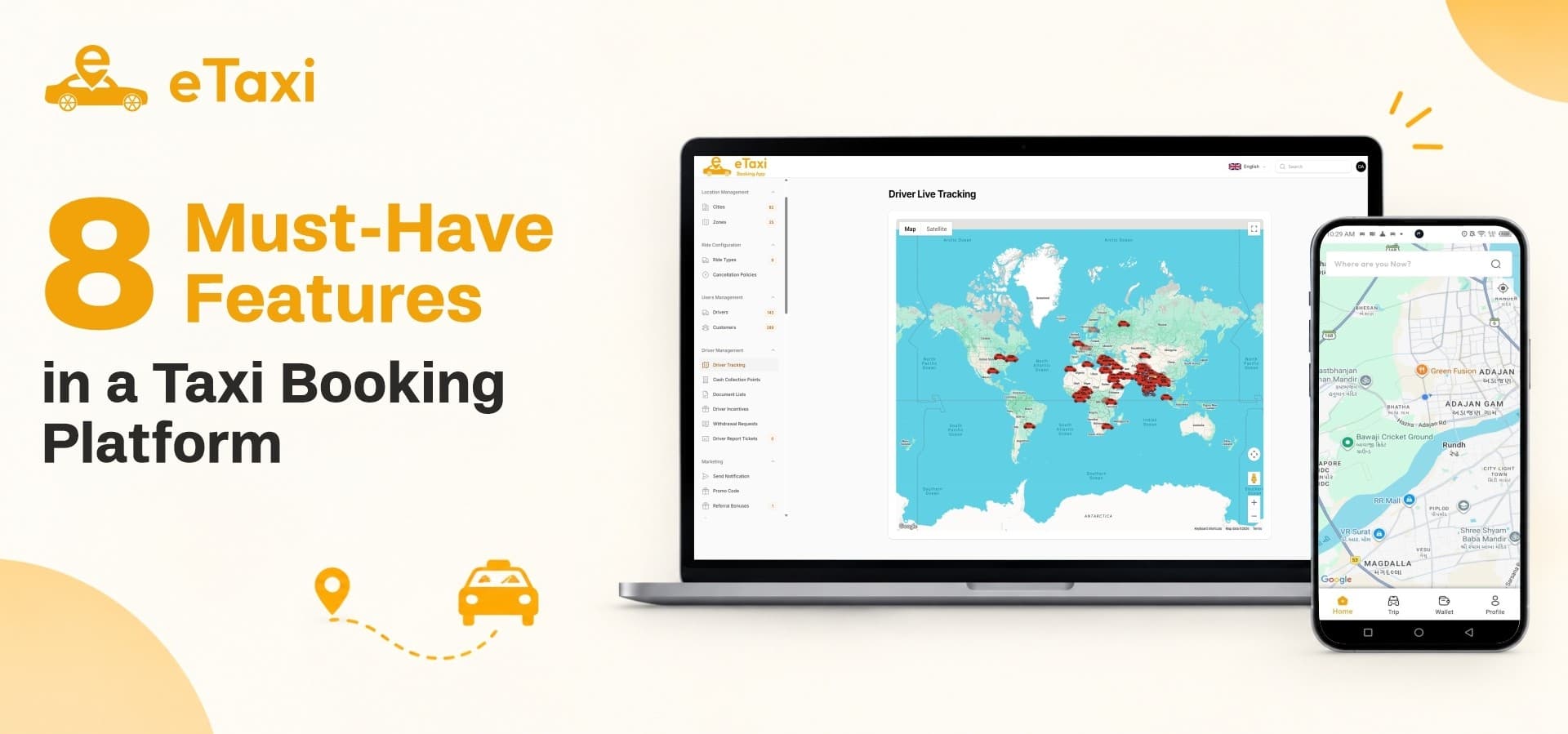
Choosing a taxi booking app for a new fleet or ride-hailing venture is not just a checklist exercise. The platform you pick determines how fast drivers get paid, how safe riders feel, and how easily you expand into new cities. Before comparing vendors or default-building something from scratch, it helps to know exactly which capabilities separate a genuinely operational system from one that just looks good in a demo video.
This guide walks through the eight features worth checking for in any serious taxi or cab booking software, and how eTaxi, WRTeam's Flutter and Laravel based solution, handles each one.
1. City and Zone-Based Service Control
A platform limited to a single fixed service area will not scale past one city. Look for granular, polygon-based zone management rather than a simple radius setting.
What to check for:
-
Ability to define exact service boundaries per city
-
Independent pricing and rules for each zone
-
Activation or deactivation of specific cities without touching the core app
eTaxi builds this in as a core admin capability. Fleet owners draw precise service zones on a map, set local pricing per zone, and expand into new towns without any custom development. Riders only ever see ride options that are valid for their exact location, which keeps the experience clean as coverage grows. This is one of the clearer signs of a mature online taxi booking system rather than a single-city script.
2. Multiple Vehicle and Ride Type Options
Riders expect choice, from an affordable bike ride to a premium sedan. A platform locked into one vehicle category limits both rider reach and driver earning potential.
What to check for:
-
Support for bike, auto rickshaw, sedan, and premium categories in one app
-
Ability to add new vehicle classes from the admin panel
-
City-wise availability settings per ride type
eTaxi supports all of this natively. Admins can introduce a new vehicle class for a specific city directly from the dashboard, with no separate build required. This flexibility is what makes a cab booking app usable across different rider budgets and city demographics instead of forcing everyone into one pricing tier.
3. Real-Time Tracking and a Fair Driver-Matching Engine
Slow or random driver assignment is one of the fastest ways to lose both riders and drivers. A platform needs live location tracking paired with matching logic that feels fair, not arbitrary.
What to check for:
-
WebSocket-based or equivalent live location updates
-
Matching based on proximity and driver rating, not chance
-
Fallback logic so requests don't go unanswered
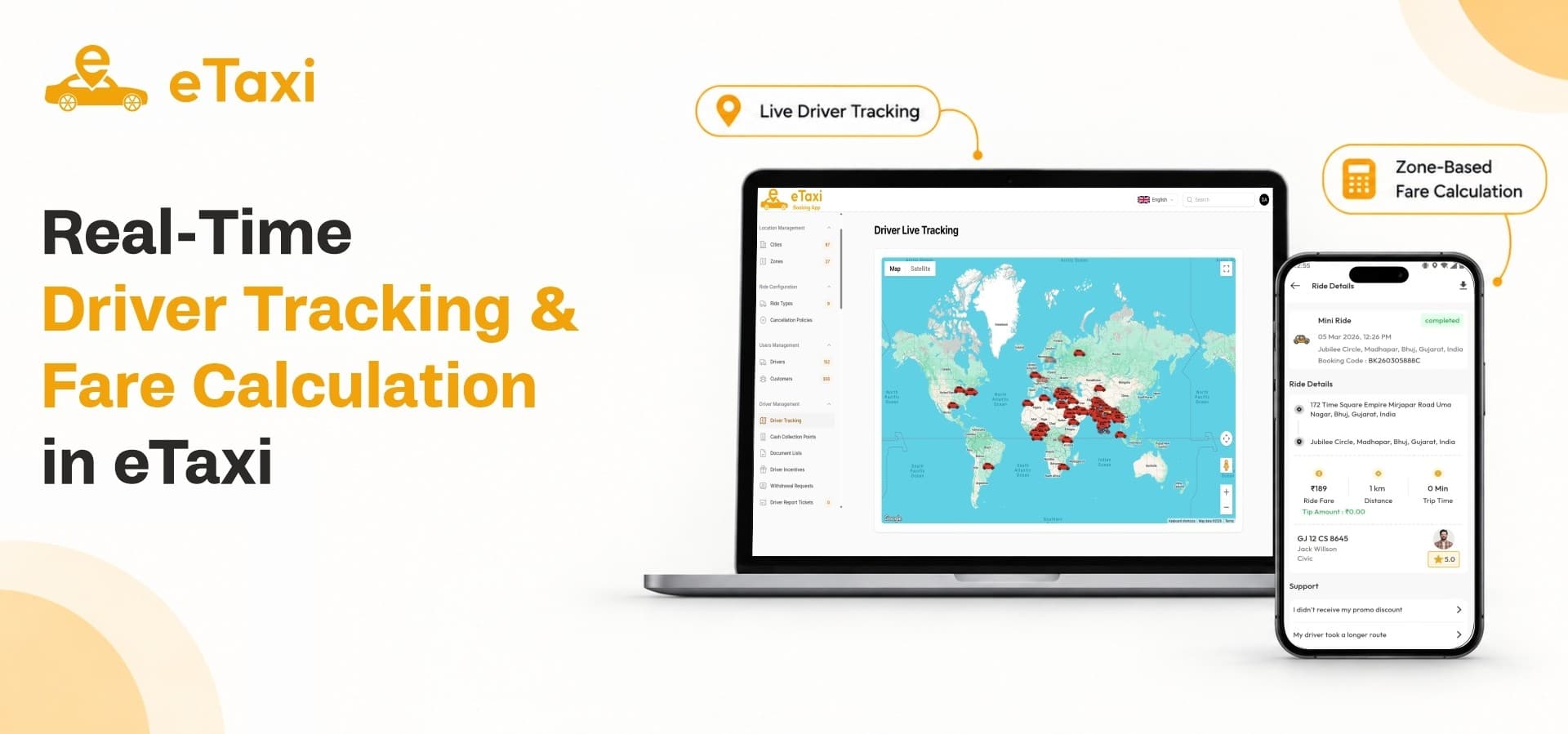
eTaxi runs on WebSocket-based real-time updates for location, fare calculation, and trip status. Its matching engine uses scoring, batching, and fallback logic to assign rides by proximity and rating rather than random dispatch, which keeps driver earnings steadier and cancellations lower. This is the backbone of any dependable ride booking app.
Learn More : Real-Time Driver Tracking and Fare Calculation in eTaxi
4. A Configurable Fare and Commission System
Fixed, one-size-fits-all pricing rarely survives contact with real operating conditions. Different cities, ride types, and demand periods all need their own fare logic.
What to check for:
-
Base fare, distance, waiting time, and night charge settings
-
City-wise and ride-type-wise surge or peak pricing
-
Commission rules that scale automatically with ride volume
eTaxi lets admins configure base fare, distance charges, waiting fees, night charges, and surge rules independently per city and ride type. Commission is deducted automatically on every completed ride, generating a recurring revenue line that scales with ride volume. Reviewing how a vendor handles this is usually the fastest way to judge whether it's genuine taxi management software or a stripped-down booking template.
5. Structured Driver Onboarding and Document Verification
A fleet is only as reliable as its verification process. Weak onboarding creates compliance risk and erodes rider trust over time.
What to check for:
-
Configurable document requirements without code changes
-
Clear approval, rejection, and resubmission workflows
-
Ability to suspend or reactivate drivers as needed
eTaxi keeps new driver accounts under review until an admin verifies submitted documents, with instant visibility into approval status and rejection reasons. Document requirements can be updated from the admin panel at any time, so the platform stays compliant as local regulations shift, without needing a developer involved.
Why This Matters for White-Label Buyers
For agencies or startups planning to launch under their own brand, flexible onboarding rules matter even more. A white label taxi app needs to adapt its verification process to different regional document standards without a rebuild each time those rules change.
6. In-App Wallet, Payments, and Promo Codes
Payment friction is a common reason riders abandon a booking mid-flow. A well-built platform handles wallets, promotions, and refunds without pushing users to external apps.
What to check for:
-
Digital wallet for storing refunds, rewards, and promotional credit
-
Promo code application at the point of booking
-
Transparent transaction history for both riders and drivers
eTaxi includes an integrated wallet that stores refunds and rewards, with a transparent transaction ledger for full visibility. Riders can browse and apply active promo codes during checkout, and drivers see net earnings after commission directly in their own wallet view. This kind of built-in financial layer is a strong indicator of solid cab management software, since it removes the need for a separate payments add-on.
7. Rider and Driver Safety Tools
Safety features are no longer optional in a taxi platform; they are often the deciding factor for riders choosing between apps.
What to check for:
-
OTP verification at trip start
-
SOS or emergency alert options
-
Live trip sharing with trusted contacts
eTaxi verifies each trip starts with OTP matching between rider and driver, reducing fraud and mismatched pickups. Riders can also share live trip details, including pickup point, destination, and current location, with friends or family for added peace of mind throughout the journey.
8. Centralized Admin Reporting and Support
Behind every smooth rider and driver experience, there needs to be an operations team that can actually see and manage what's happening across the fleet.
What to check for:
-
Live ride monitoring alongside historical trip search
-
Unified support inbox for trip-linked tickets
-
City-wise financial and tax reporting
eTaxi's admin panel gives full visibility into trip statuses, fare breakdowns, and assigned drivers in real time, with the authority to step into disputes when needed. A unified support inbox routes customer and driver tickets with full trip context attached, and tax rules can be configured city by city for accurate, compliant reporting.
Where eTaxi Fits
Most of the features above exist as individual add-ons across different vendors, which usually means stitching together several tools before a fleet can go live. eTaxi bundles city-zone control, fare configuration, driver lifecycle management, and rider safety into one Flutter and Laravel source code base, which is a meaningfully different starting point from a bare-bones uber clone apps script that needs heavy customization before launch.
Because it ships as a white label taxi app, fleet owners, transportation startups, and agencies building for local clients can launch under their own branding without building the underlying logic from zero.
Ready to see how eTaxi handles fleet operations end to end? Explore eTaxi on WRTeam Marketplace.